Mystery sheen vs. reported discharge: what's the difference?
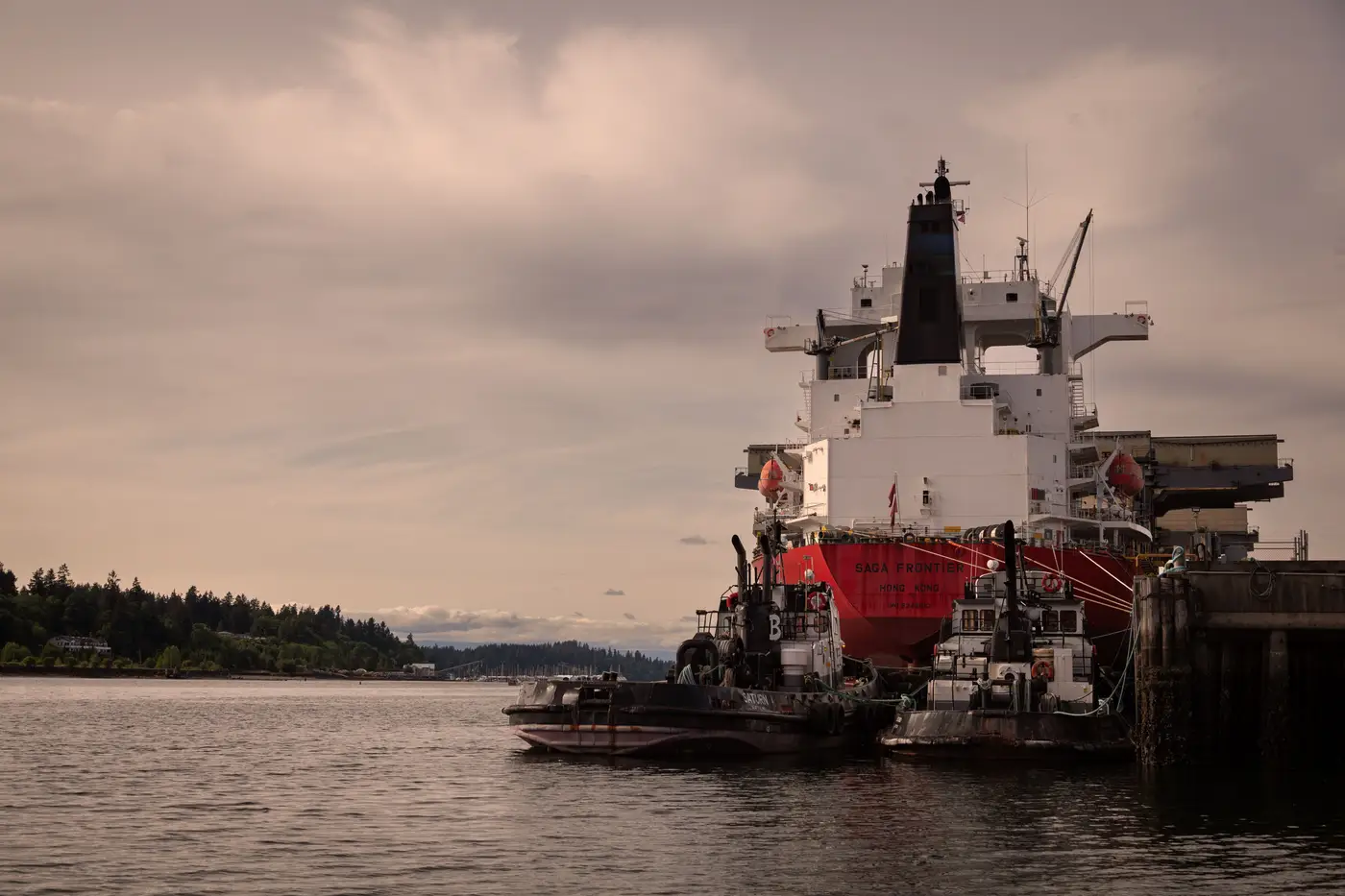
A deckhand calls down from the catwalk. There's a sheen off the port quarter, spreading slow with the tide, and nobody on your shift logged a spill, a transfer upset, or a tank overflow. You walk the berth, you check the manifest, you check the bilge logs. Nothing lines up. That's the moment the paperwork starts asking a question you can't yet answer: source known, or source unknown.
What "mystery sheen" actually means
The term gets used loosely on the waterfront, but it has a specific meaning to anyone who's called the National Response Center. A mystery sheen is a sheen reported with no identified source at the time of the call. Someone saw it, usually a mate, a line handler, or a terminal watchstander doing rounds, and nobody can point to the vessel, pipeline, or shoreside operation that put it there. The NRC takes the report, assigns it a case number, and the question of origin gets kicked to whoever responds: Coast Guard sector, state environmental police, or your own HSE team if it's inside the terminal's area of responsibility.
Mystery sheens aren't rare. They show up around port areas with old infrastructure, legacy contamination in the sediment, recreational boat traffic, or just a slick that drifted in on the current from somewhere upriver. Some get traced back within a day. A lot don't, and they get closed out as unresolved or attributed to "unknown natural seepage" or "legacy residual" because nobody could put a name on it before the sheen broke up or washed out on the tide.
How that differs from a reported discharge
A reported discharge starts from the other end. You already know the source, because your own operation is the source: a transfer connection that backed up, a tank that overtopped during a fill, a hull breach, a bilge pump that ran when it shouldn't have. The report you file names the vessel or the facility, states roughly how much product got away, and kicks off the notification chain your SPCC or facility response plan already spells out. Nobody's debating where it came from. The work is containment, cleanup, and documentation of what happened and when.
The practical difference is what happens in the hours right after someone spots the sheen. With a reported discharge, you're moving straight into response mode because the cause is already on your desk. With a mystery sheen, you're still in the identification phase, and that phase runs on documentation: where exactly it was when first seen, which way the tide was running, how far it spread before it broke up or dispersed, and what the source frame looked like when someone finally got a photo of it.
Investigators, insurers, and your own corrective action file all want that record, and a lot of terminals are working from a hand sketch and a time stamp because nobody had a tool built to answer it.
Why the distinction matters for your report
If a sheen near your berth turns out to be a recurring unexplained sheen, one that shows up on a dropping tide every few weeks with no clear source each time, the mystery-sheen label starts carrying weight it didn't have the first time. Regulators and port authorities want to know if it's the same event repeating or a string of unrelated ones, and that comparison only works if each occurrence got mapped the same way: extent, timing, and a dated record you can lay side by side with the last one.
That's the gap we built Oil Sheen Detect to close. It takes daylight satellite imagery over the berth and turns the sun-glint and spectral contrast a sheen produces into a dated sheet, an outline of the sheen's extent, an estimated area, and the source frame, generated the moment an event is flagged. It won't tell you who caused it. It gives you the mapped record of what was on the water and when, which is exactly what the mystery-sheen file and the recurring-sheen pattern both need. Take a look at how it works at oilsheendetect.com if you've got a sheen on your hands and a report due.